
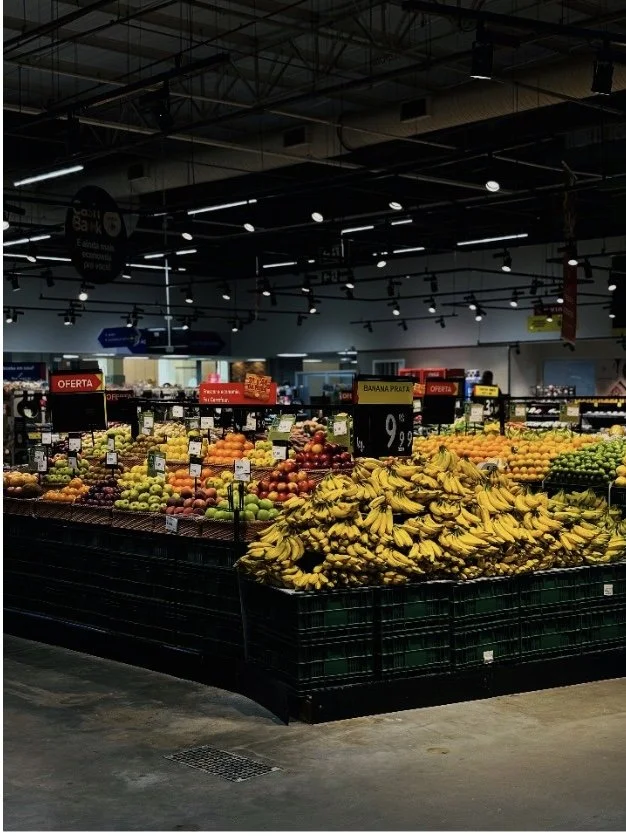
Heringer, A. (n.d.). Supermarket. Dupe.
Who would have thought supermarkets would become such a big part of the 2026 election campaign? Everyone in Aotearoa wants affordable food, but different parties have different ideas on how to make it happen.
The Greens say the solution could be KiwiMart.
For those of you who haven’t been keeping up with the news lately, let me break it down for you.
The Green Party have recently proposed a new policy that they hope would split up the supermarket duopoly through the government spending $1.3 billion on purchasing 120 existing supermarkets and turning them into KiwiMart stores; a government run chain that would prioritize affordability for New Zealanders.
I love to hear any idea that aims to bring down the cost of food and cost for living for Kiwis. According to Stuff, New Zealand is ranked as having the fifth most expensive groceries among 38 OECD countries, and as uni students, we know how difficult it can be to afford the basics.
For the past six months I’ve been living off $30 a week on food, and it would be great to be able to buy more for my budget.
The Greens also proposed a bill that would ban excessive pricing, which would be extended to other sectors such as energy and fuel, $150 million a year for Fair Food Funds for communities, and the restoration and expansion of Ka Ora, Ka Ako, among other things.
According to Green Party co-leader, Chlöe Swarbrick, "Our country produces enough food to feed 40 million people. There is no shortage of food in Aotearoa, but it's somehow becoming too expensive for too many New Zealanders.”
"Two companies control what almost everyone in this country eats, and they take about a million dollars a day in excess profit out of our shopping baskets. That is money that should be in people's pockets."
So, what is the supermarket duopoly and why is it bad?
Almost all the supermarkets in Aotearoa are owned by two huge companies: Foodstuffs (New World, Pak n Save, Four Square), and Woolworths (Woolworths aka Countdown, Fresh Choice, Super Value). Because of the lack of competition, these supermarkets can base their pricing off each other, instead of being competitive. Businesses wanting to open their own competitor supermarkets tend to find all suitable sites have already been taken by the duopoly, who also own majority of the food distribution centres.
"There are only so many places in a town where a supermarket can go, and Woolworths and Foodstuffs have seen to it that these sites are locked up. We're not short of supermarkets, we're short of competition. As experts have noted, divestment, that is, buying already existing stores, is key to breaking up the duopoly", Swarbrick said.
In 2022, the Commerce Commission market study found that Foodstuffs and Woolworths made excess profits of roughly $430 million annually.
That’s an insanely huge number!
Since supermarkets obviously have it made, why would they want to sell to the government?
Well, the thing is, they really don’t.
According to RNZ, “nearly 500 owner-operators of Foodstuffs supermarkets signed open letters to National leader, Christopher Luxon, expressing concern about the policy.”
These two companies make over $400 million annually. Is $1.3 billion really enough to buy 120 stores? If every store was offered the same amount from the government, that would be roughly $10.8 million each. I don’t know how much the average individual supermarket makes per year, but I get the feeling that $10.8 million is far from a mouthwatering offer.
Unlike Woolworths stores, which are company owned branches, Foodstuffs stores are all individually owned local businesses. I work at Ravenswood New World, which just celebrated its 5th birthday. What happens at that store could be totally different to what goes on in other New World’s. For example, we get a staff discount, the store regularly donates to the community, and as volunteer fire fighter, I’m allowed to leave work without clocking out if I get paged. This isn’t a reflection of Foodstuffs, but instead the local couple who own the supermarket.
For me personally, it’s hard to imagine Ravenswood New World being forced to sell to the government. What would happen to my job? There are people from all walks of life who work with me. Would we all be made redundant? Would KiwiMart be managed by locals? Would it take the same community focused stance that Ravenswood New World already has?
Other parties have jumped in with their own ideas on how to bring the cost of food down. National and New Zealand First oppose the idea of government owned supermarkets but agree the duopoly should be broken and would see Foodstuff split into two separate chains. Labour would follow the Greens and make price gouging illegal. New Zealand First, Greens, Labour and the Opportunities Party all agree that the Commerce Commission should have greater power for holding market dominant companies to account. Te Pati Māori want to create further access to land for growing food and would support Māori owned supermarkets and local kai providers.
“Kai sovereignty means affordable, healthy kai connected to whenua, whakapapa, and Māori control”, they said.
And finally, ACT. They want to create a fast-track approval process for supermarkets so that new competitor stores can “rollout… stores and warehouses within months”
Overall, I totally agree with the Greens that there is a massive problem with food prices in Aotearoa. According to their policy, “one in five children live in households that run out of food, food costs have increased by 29% over the last five years, and demand for food banks and emergency food grants is the highest it has been at any time, except during the pandemic.”
Food is a basic need, and healthy, nutritious options should be affordable and accessible for everyone.
Do I agree with the government taking over 120 stores across the country? Not particularly.
However, the Greens plans to ban excessive pricing and help communities to afford food on a grassroots level through supporting maraes, food hubs, social supermarkets and food rescue organisations while the system gets fixed can only be a good thing.
Given that all parties recognise food prices in Aotearoa are out of control, hopefully we see some change after the election.