
Students Still Suffering from High Cost of Living

Photo: Sourced from Freepik, 2025.
After the inflation rate was reduced by 3% in 2023, it has steadily climbed a full percent in the last year, and students are getting tired of it.
“There hasn’t been a lot of action I have seen to mediate it. If we’re trying to study we usually work jobs on top of that, and if we’re trying to study we can’t work enough of our jobs,” said UC Politics society executive, Xavier Moir.
One of the biggest struggles students have found is the increasing rent prices throughout Christchurch.
“It’s at the stage where if you’re paying less than $200 you’re lucky. When over half your pay checks are going to rent, it is a little demoralising,” Moir said.
As Christchurch student numbers continue to rise, it has become more difficult for students to find flats, with large queues forming at many viewings last year.
“A lot of people talk about housing, and talk about renting, but I feel like no one really had any ambitious policies that I was really noticing. That may change this year -- I hope it does.”
Aside from renting, grocery and fuel prices have been increasing across the nation and do not show signs of slowing down.
“For young people this election is going to be affordability. People are struggling to live at the moment, people can’t afford to put good meals on their plates, and people can’t get jobs.”
With the election approaching Professor Stephen Hickson wanted to remind people of the success New Zealand was experiencing following the end of the COVID-19 era.
“The inflation rate is back within the Reserve Bank’s target range, the outcome of that has been a longer-than-we-would-have-liked economic slowdown.”
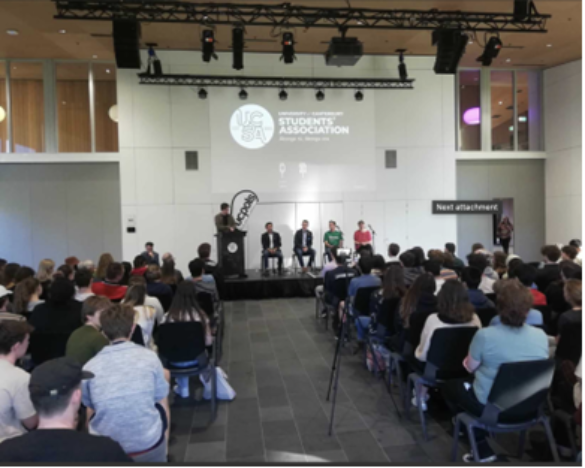
Photo: UCPol’s 2023 Ilam candidate debate at the UCSA., Xavier Moir.
Professor Hickson pointed to the unemployment rate rising higher than some were hoping as a more worrying sign than the inflation rate.
COVID-19 can be considered as part of the reason for economic turmoil, leading to criticism for the Reserve Bank and the government's response.
“The Reserve Bank were worried about interest rising at the time, and they probably overdid the whole thing; they probably did not need to buy as much debt as they did.”
New Zealand’s economic struggles cannot necessarily be blamed on one thing though, with both the Reserve Bank and the government having roles to play.
“The Reserve Bank has a unique gift: It can create money out of thin air. They essentially wave a magic wand, and suddenly your bank account is bigger. It’s akin to printing money.”
Clarity is another aspect the economy could benefit from, with many still unclear of the source of issues.
“Is it a general rise of all prices, including rent, or is it that we have a shortage of rental properties that is pushing prices up? I’m not sure what the answer is, but knowing that answer might help and make a difference,” said Hickson.
Professor Hickson believes the upcoming election will be interesting. While New Zealand has not had a single term government since 1975, National are facing heavy pressures, with low polling numbers and a magnitude of growing social and economic backlash from voters.
However, Labour still do not have an easy path ahead as the opposition, with some issues still to fix.
“I think they have a legacy they’re trying to shake off. You see Chris Hipkins doing it and saying they’re a different government now, but their problem is it has the same faces.”
New Zealand’s cost of living still needs work done, even with COVID-19 lingering as a cause to pinpoint, students and workers are still suffering from rising prices.
With much success found in the last election, the UCPols society is expecting to host debates and meetings with candidates closer to November.
“We’re trying to continue our speaker series with politicians across the spectrum, it will be a busy year,” Moir said.
Students will be able to meet with their local MP candidates and have their questions answered.