
A couple of weeks ago, I received an email saying I had been specifically recommended as someone who would be a great fit for the University’s 2027 Undergraduate Brand Campaign, and would I be interested in representing the Bachelor of Communications?
It took me straight back to high school, when I was unashamedly used to show how “diverse” the school was, despite it being a school in North Canterbury where I was often the only brown kid in my class.
The request from UC marketing got me thinking: Why was I being asked to represent a degree where I don’t reflect the demographic statistics? What actually made me a “great fit”? And how does UC approach representation so it feels genuine rather than tokenistic?
A systemic literature review of university branding noted “higher education is now widely referred to as a market… [with] fierce competition for students’ enrolment among higher learning institutions.” UC is a huge business, and realistically, their marketing and branding is there to attract future students. When they use visibly Māori, Muslim, Asian and Pasifika students in their campaigns, they want to show future students who can identify with them that they too can succeed at UC.
This isn’t a bad thing and can be effective when done thoughtfully, as representation helps prospective students see themselves in academic spaces where they might otherwise feel invisible. But it also has to be done carefully. Using a single person to represent an entire culture can flatten communities into tokenistic symbols.
So how does UC balance cultural visibility with authenticity?
The UC 2024 self‑review collects a range of ethnicity data and highlights Māori and Pasifika numbers. In 2024, 10.2% of domestic students identified as Māori and 3.4% as Pasifika, so roughly one in ten students were Māori, and three in every hundred were Pasifika. Despite that, UC’s branding features Māori and Pasifika students at a rate far higher than their actual presence on campus. This could be seen as either disproportionate, or an intentional effort to make sure minority groups are seen.
When I asked UC how they measure whether representation in marketing is improving student belonging rather than just their brand, they responded, “UC assesses this through surveys and feedback from students, staff and student groups on topics including representation and belonging.”
However, the public 2025 UCount Student Survey results fail to give any real statistics on this issue, only mentioning “most of you feel like you truly belong at UC!” before saying “It’s never too late to make connections on campus!”
So how do we know that UC students truly feel like they belong?
Dominic Toli, a second‑year law student and the UCSA’s 2026 Pacific Representative spoke to Canta about his experience as a Pasifika student at UC. He commented he feels strong support for the Pasifika community, particularly through the Pacific Development Team and Pacific clubs, which he describes as creating “a strong preservation of Pacific culture through diaspora.”
He also acknowledged the reality of being part of a small demographic.
“Having studied law for the past year and a bit, it is easy to feel disconnected in spaces where there are very few Pacific Islanders present”, he said. “Pacific Islanders make up close to around 3% of the university and in my law class it feels like we make up less than one. Sometimes I feel isolated as a Pacific student, but I’m fortunate enough to have specific support for Pacific law students through UCPLSS, Bill Burke, and my Pacific Islander friends.”
Despite this, Toli noted he feels comfortable expressing his cultural identity at UC. “Part of this comes from my sort of ‘idgaf’ attitude where expressing culture for me carries little restraint. I’m a very proud Samoan, Tongan student… if people don’t like me expressing it, totally up to them, but I’ll just continue expressing my Pasifika identity regardless.”
He also mentioned that visibility varies across Pacific communities. “For more represented Pacific Islands like Fiji and Samoa, their cultures and perspectives are more visible through club events and PDT events. For the less represented islands, there seems to be a less visible representation of these cultures and perspectives.”
Most importantly, Toli said he believes UC is genuinely trying. “Having sat on boards and been in conversations with many lecturers, there is definitely a keen attitude from UC towards understanding the needs and experiences of Pacific students.”
I asked him how he feels when he sees Pasifika students on UC billboards and branding. “I LOVEEE IT! Whenever I see UC actively acknowledging Pacific Island presence at UC, it makes me feel a sense of belonging… Pacific Islanders, for many of us, come from parents or grandparents who came to New Zealand with nothing but a dream to make use of the many opportunities that Aotearoa provides to provide for families back home, build lives in New Zealand and/or pursue higher education. To see a good representation of us is a reflection of this progress.”
“My opinion is not reflective of every single Pacific Islander at UC; however, I am very involved with the Pacific at University so my perspective on things comes from a place of involvement.”
After looking at UC’s branding and speaking with students like Toli, I believe UC is making a genuine effort to move beyond tokenism and they value student’s cultures and identities beyond their marketing potential.
A UC spokesperson commented “UC aims to reflect its community respectfully and represent the range of students and experiences across the University. Where appropriate, we seek feedback from relevant staff and student groups and regularly review our communications to ensure representation supports students’ sense of belonging.”
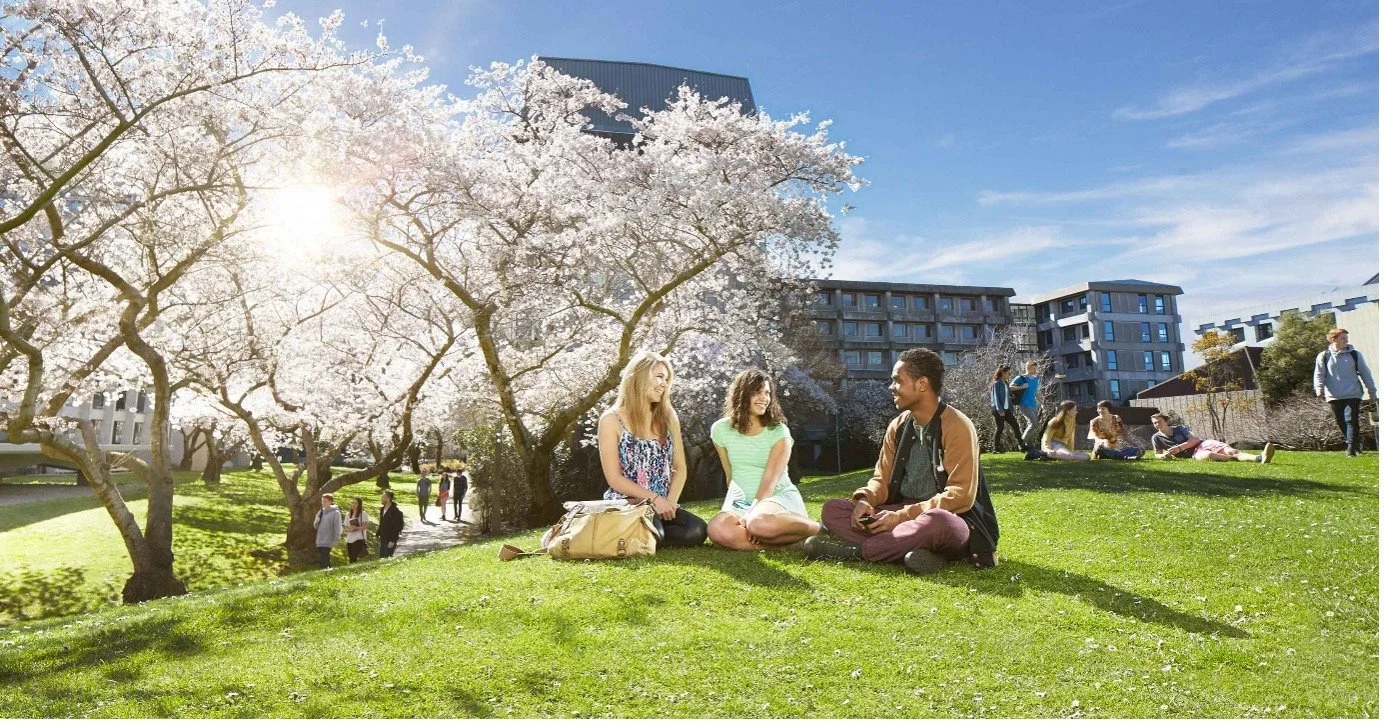
UC website thumbnail for the ‘Future Students’ page. Source: UC website