
PHOTO: Reet Rachwani, Dupe.
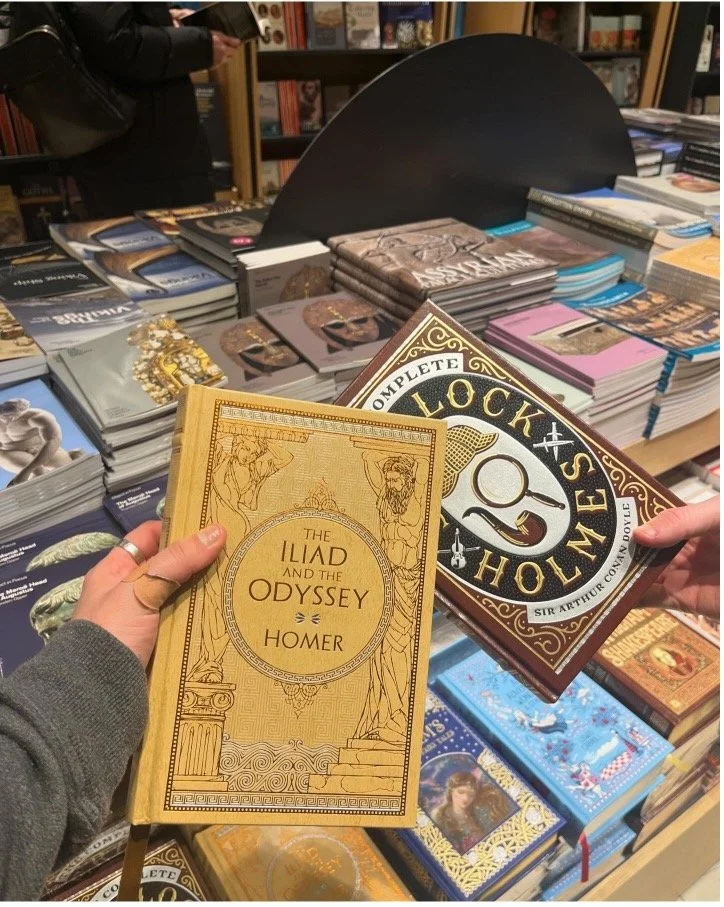
Let’s talk about Christopher Nolan’s Odyssey.
All I wanted to do after watching this movie was hug my dog. IYKYK.
You know a movie has really hit you when you can’t stop thinking about it.
I couldn’t stop thinking about the gory scene of Circe turning Odysseus’ men into pigs. Way too graphic, in my opinion. But I also couldn’t get over the intense, beautiful stringing of the bow scene, the jaw-dropping moment of the gates of Troy opening, and the absolute aura farming Agamemnon managed during the four minutes and twelve seconds he was on screen.
The costumes were well done, the settings were beautiful, and the soundtrack was exquisite.
Overall, Nolan delivered a visually stunning, tightly executed movie.
However, it wasn’t perfect.
When I was growing up, I had a rule: if I wanted to watch a movie based on a book, I’d need to read the book first.
As a kid, this frustrated me. Why would I take the time to read the book when I could watch the movie within a few hours?
Now, as a young adult, I am so happy I enforced this rule for myself, because movies remove a lot of important details and even change the original story; just like Christopher Nolan does in The Odyssey.
Nolan’s interpretation of this ancient poetry is bold and visually compelling, but he gets one crucial detail wrong, and in my opinion, it changed the entire meaning of the story.
In the movie, Odysseus is haunted by PTSD and filled with regret over the destruction of Troy. His journey is about overcoming the trauma of war, which is not Homer’s Odysseus at all.
Odysseus’ flaw in Homer’s Odyssey is not trauma, but hubris. He’s brilliant, cunning, and proud, and that pride is what destroys him.
The most important scene in the entire epic proves this.
One of the most significant changes Nolan makes is the near-total removal of the gods. In Greek mythology, it is well known the gods have a habit of interfering with human lives, and The Odyssey is built on that interference.
Having studied The Odyssey for almost three years now, and having read the poem multiple times, I went into the movie theatre knowing exactly what should happen, and when I realised the gods and their roles had been cut, I wasn’t very impressed. Some people didn’t mind this decision, but the gods are the engine of the plot and the forces responding to human virtue and vice.
I didn’t mind that Poseidon and Zeus were personified by the sea and by thunder and lightning. But Athena’s role is far greater than simply showing herself to Odysseus and shaking her head in disappointment.
Those who haven’t read The Odyssey won’t know about the wind god, Aeolus, who captured the storm Poseidon created in a bag; and they won’t know about Hermes, who also had a pretty significant role in the story.
If you know, you know. But if not, the poem is waiting for you.
Without the gods, Odysseus’ journey loses its moral dimension. In Homer, every setback is a direct consequence of the choices Odysseus makes, driven by his hubristic pride. Poseidon punishes him because Odysseus provokes him. Athena protects him because he earns her favour. Aeolus helps him because he respects divine authority. By removing these figures, Odysseus’ suffering becomes arbitrary rather than earned.
Nowhere is this change more damaging than in the Cyclops scene, the moment where Odysseus’ pride triggers divine retribution.
Watching this movie in the theatre, I was genuinely impressed until the Cyclops scene.
Those who have read The Odyssey know many significant events were altered or omitted in the movie. But this particular event is objectively one of the most important moments in the story; therefore, I was deeply disappointed to find the infamous “nobody” trick had been cut.
In Homer’s poem, Odysseus’ brilliance peaks in the Cyclops’ cave. He tricks the Cyclops by calling himself “nobody”, blinds him, and escapes when the Cyclops shouts, “nobody is hurting me!”
It is Odysseus at his cleverest and most strategic.
He is defined by his cunning and intelligence until his hubris gets in the way. He boasts about defeating the monster and yells out, “I am Odysseus, King of Ithaca.”
This moment is the turning point of the epic.
After revealing his name to the Cyclops, his luck takes a turn for the worse. His pride matters more than his and his men’s safety. Because Odysseus reveals his name, the Cyclops prays to his father, Poseidon, who curses him.
Everything that follows stems from this single moment of pride.
Without this scene, Odysseus’ suffering has no cause. There is no moment where his pride damns him, no divine punishment, no moral turning point. Nolan’s Odysseus becomes a man haunted by trauma, not a hero punished for arrogance.
It’s a completely different story.
Nolan’s Odyssey is undeniably ambitious, but ambition alone cannot replace the moral architecture of Homer’s poem. By removing the gods and rewriting Odysseus’ defining flaw, the film trades a story about consequence for one about psychological recovery. And without the “nobody” trick, the moment where cunning collapses into pride, the epic’s turning point disappears entirely. Nolan offers a compelling war drama, but it is not The Odyssey. It’s a different story wearing the name of a much older one