
Chalking for Change.
Historically, students have been at the forefront of activism. We stand at the entrance gates to a world in which we have our whole futures to lose, and the urgency of causes which matter to us is therefore both extra-personal and exacerbated by the spirit of the campus environment.
However, it's not easy to be a student activist in 2026. With a general Western tilt towards conservatism (and/or stagnation) in the last few years, people who want to incite change are at a distinct disadvantage. Joseph Davidson-Labout, editor of The Canterbury Memo, UC’s independent student magazine, describes the reason for the difficulty of meaningful activism in a modern, for-profit university in their latest issue: “..[i]n order to preserve their commercialised interests… tertiary institutions now favour the sort of neutrality and sterility you find in any corporate office.”
The most well-known examples of recent institutional reactions to student protests and advocacy are the Trump administration's widely publicised crackdowns on university protest in the United States. The Memo doesn't let UC off the hook, describing multiple instances of security both overtly and covertly thwarting students at the vanguard of change.
On the 1st May last year, a sit-in protest by the Canterbury chapter of the SJP (Students for Justice in Palestine) was met with violence by UC Security, who left one student activist with a broken arm and two others concussed. Two months later, in July, Fine Arts student Hana Sellens' political (specifically, pro-climate and anti-Luxon) posters were forcibly removed by campus security. Only a few months ago, graduate Davien Gray was approached by security at their graduation ceremony and told to remove their keffiyeh, which they wore to honour Palestinian students whose universities have been destroyed.
Within an institution cautious of risking their commercial image, where students have faced difficulties excersising freedom of speech and the right to peaceful protest, chalking–using chalk to convey political messages on campus concrete–has become an increasingly viable option for student activists. Roxanne* (he/she), who has recently begun to chalk pieces around UC, describes her ethos as doing 'what I wish others would do for me.'
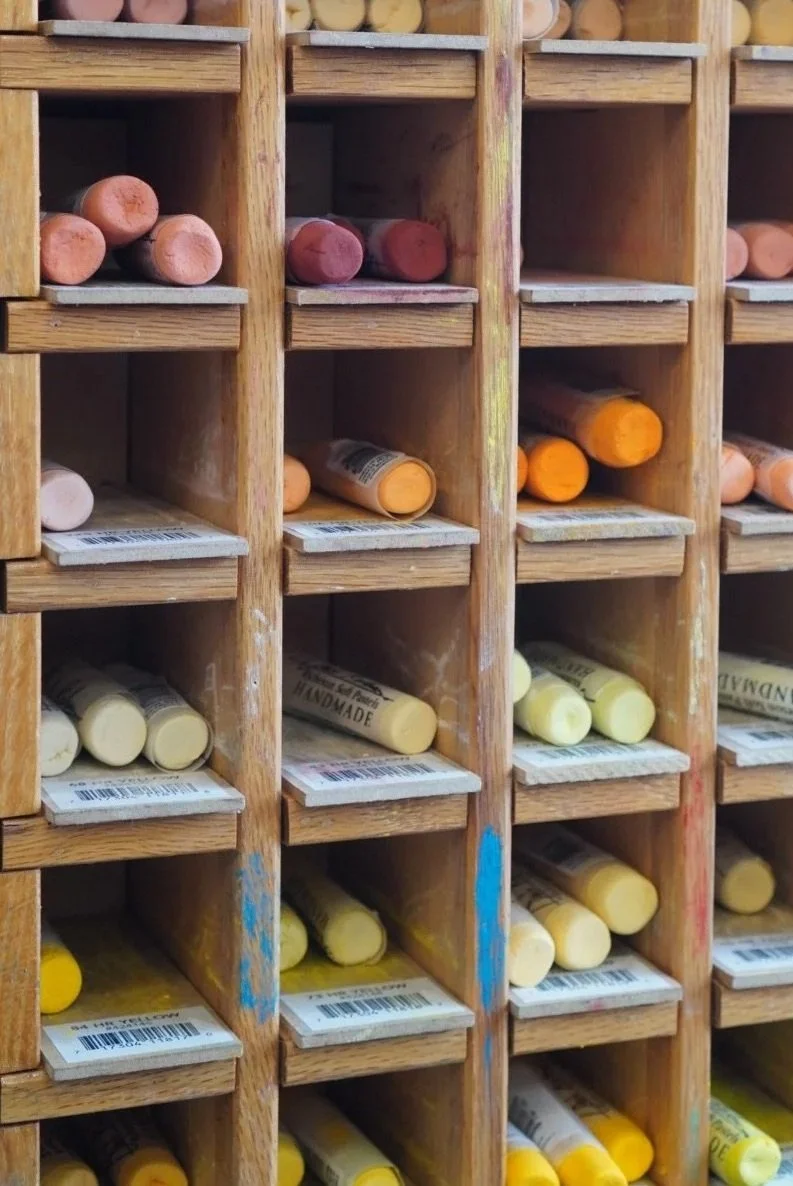
PHOTO: Vera Kent, Dupe.
Roxanne's pieces take about seven hours each to complete, and his work so far has focused on topics including trans visibility and Holocaust remembrance. Her Holocaust piece, a black triangle bordered with ombre pride flags, reclaims a symbol used in concentration camps to identify those deemed “asocial”. It also includes a black 'repeat offender” bar reading 'NEVER AGAIN' as a nod to its relevance in the present day, especially in terms of anti-trans legislation. This reclamation of iconography used for violence and repression, Roxanne hopes, “get[s] people thinking about it in either direction… The entire piece is a warning–history is going to repeat itself if we don't stop”.
Roxanne aspires to create an environment of activism which reflects a clear political identity for the University. “Peaceful protest,” she explained, “is more about the people. Temporary art protest is more locked into the structure in which it's done in. No matter what the campus says, the implicit assumption is that this is how this place is. [While it's] not as useful as active protest… I find it quite powerful, because it's more like setting the vibe… to do further protest.”
Roxanne said her work has not been disrupted by campus security so far. While this is how it should be, it's not the case for all chalking on campus. Students for Justice in Palestine (SJP)'s chalking last year incited swift reactions from UC security, who hosed it away and, the Memo alleges, were captured on video training the high-powered hose on student activists themselves and calling them “really fucking irritating”.
In an ideal world, universities would serve the students who make them what they are. Unfortunately, the idealistic image of educational institutions that exist to educate, investigate and incite open discussion is becoming less and less attainable, exchanged for neoliberal economic policies which prioritise profit over freedom and students' ability to challenge authority. Student activism has a rich history that dates back centuries and has incited major social change on multiple issues, from the Vietnam War to fossil fuels and national independence movements.
Still, campus chalking is an effective method to raise social awareness and allow for personal expression. It works within its environment, doesn't impose itself as a permanent feature, and can reach hundreds of people. Roxanne said showing people under political pressure (in his case, the trans community) that “there is support and people who love them” as the most important reason for her art.
Chalking also exposes hypocrisies within the University. Its reactionary policy towards specific student dissent shows cracks in the foundation of UC's image as a progressive institution. Why are we here, if not to involve ourselves in our communities and be able to think critically and independently? Educational institutions cannot be apolitical; economically, socially, historically–ontologically–they completely hinge on politics. And, while there is absolutely still hope for student activism, it is becoming harder and harder to enact–which is only more reason to push for change.
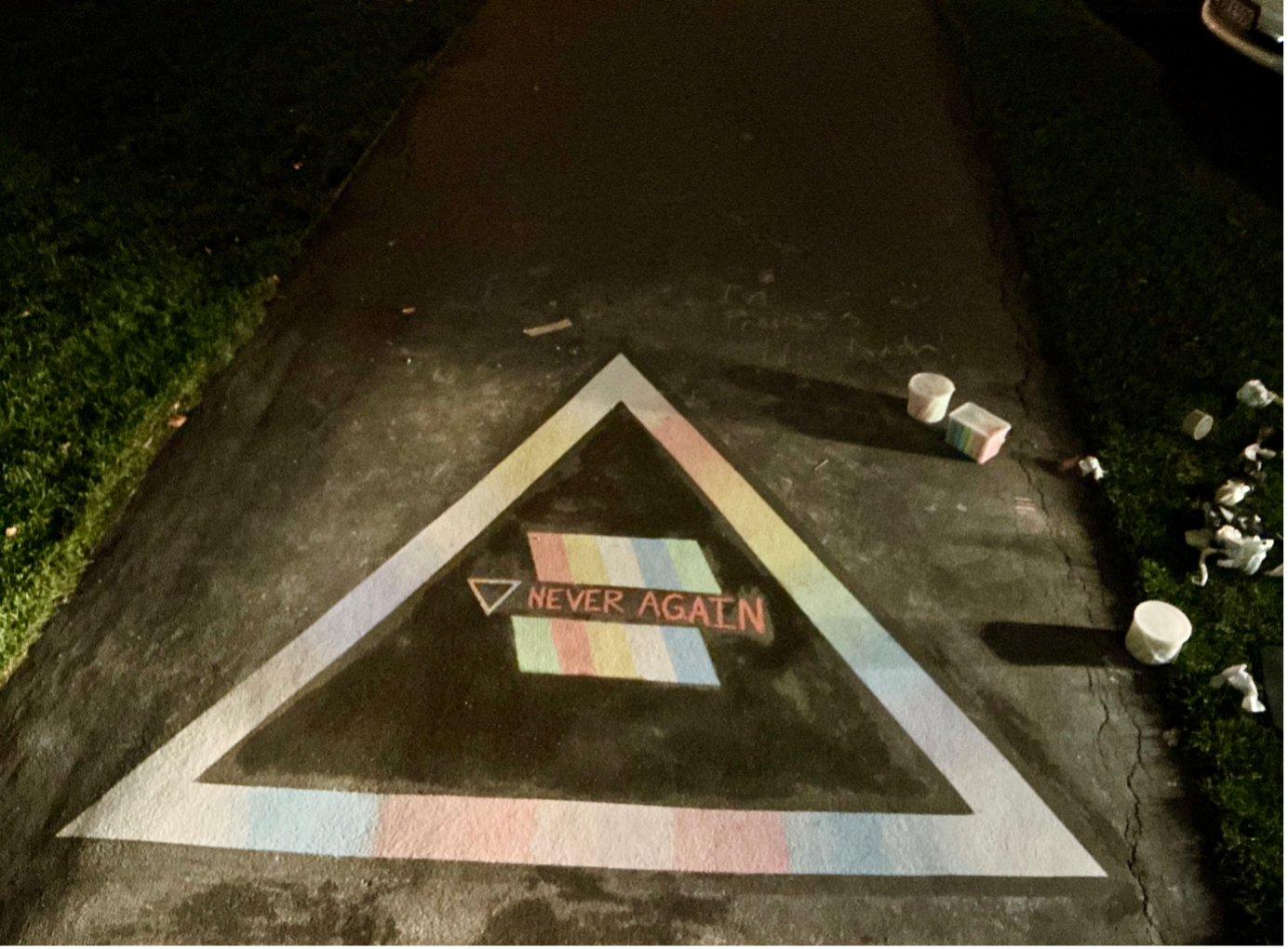
Roxanne’s chalking. PHOTO: Supplied.